
O Dicionário Definitivo de Cripto para Iniciantes: Mais de 30 Termos-Chave Explicados
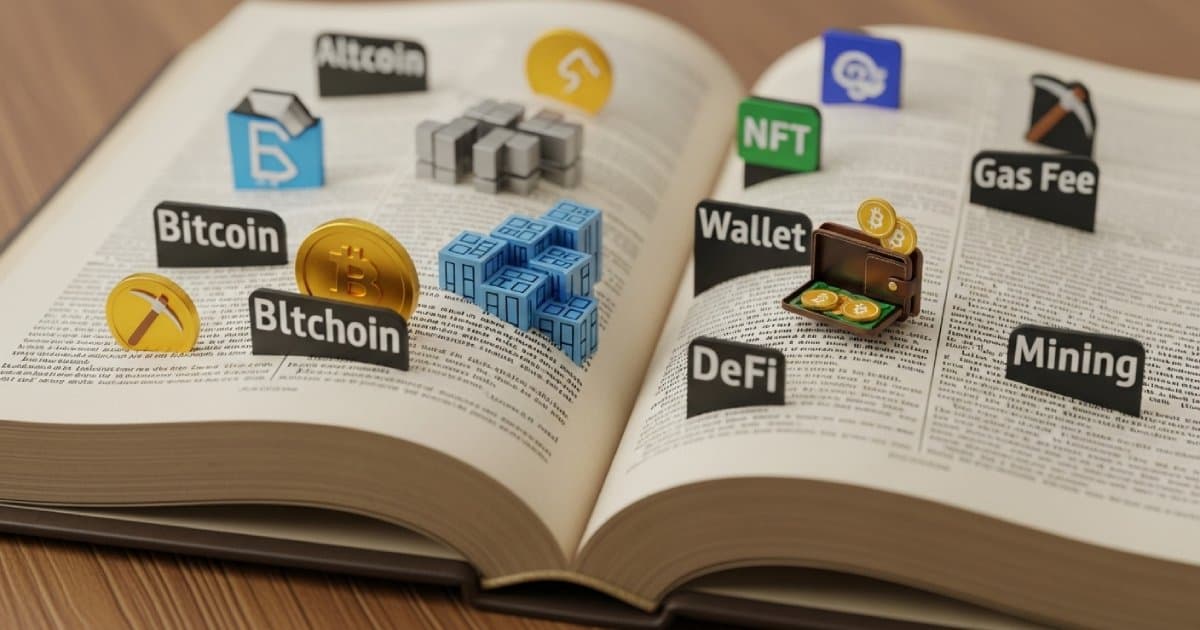
Bem-vindo ao Mundo Cripto: Seu Glossário Essencial
Entrar no espaço das criptomoedas pode parecer como aprender um novo idioma. Com termos como 'blockchain', 'HODL' e 'taxas de gas' sendo usados a todo momento, é fácil se sentir sobrecarregado. Este guia foi projetado para ser seu dicionário de referência, decompondo os termos mais comuns e essenciais de criptomoedas em definições simples e fáceis de entender. Dominar este vocabulário é o primeiro passo para navegar no mundo dos ativos digitais com confiança.
Seção 1: Conceitos Fundamentais de Blockchain
Estes são os pilares fundamentais sobre os quais todo o mundo cripto é construído. Entendê-los é crucial.
Blockchain
Uma blockchain é um livro-razão digital descentralizado, distribuído e imutável. Imagine uma cadeia de blocos, onde cada bloco contém uma lista de transações. Uma vez que um bloco é adicionado à cadeia, ele não pode ser alterado, garantindo transparência e segurança. Essa tecnologia é a espinha dorsal da maioria das criptomoedas, incluindo o Bitcoin (BTC).
Criptomoeda
Uma moeda digital ou virtual que usa criptografia para segurança. Diferente das moedas tradicionais emitidas por governos (moeda fiduciária), as criptomoedas são tipicamente descentralizadas e operam em tecnologia blockchain. Exemplos incluem Bitcoin (BTC), Ethereum (ETH) e Solana (SOL).
Descentralização
No contexto de cripto, descentralização significa que o controle e a tomada de decisão são transferidos de uma entidade centralizada (como um banco ou governo) para uma rede distribuída. Nenhuma pessoa ou grupo pode controlar a rede, tornando-a mais resistente à censura e a pontos únicos de falha.
Tecnologia de Ledger Distribuído (DLT)
DLT é o arcabouço tecnológico mais amplo do qual a blockchain é um tipo específico. Refere-se a qualquer banco de dados que é compartilhado, replicado e sincronizado entre os membros de uma rede descentralizada. Todas as partes têm sua própria cópia idêntica do livro-razão.
Criptografia
A ciência da comunicação segura. Em cripto, é usada para proteger transações, controlar a criação de novas unidades monetárias e verificar a transferência de ativos. É o que torna as criptomoedas seguras e difíceis de falsificar.
Whitepaper
Um relatório ou guia detalhado e oficial que descreve o conceito, a tecnologia e o roteiro de um projeto de criptomoeda. Antes de investir, é altamente recomendável ler o whitepaper de um projeto para entender seu propósito, mecânica e metas. O whitepaper original do Bitcoin (BTC) por Satoshi Nakamoto é um documento fundamental para toda a indústria.
Seção 2: Tipos de Ativos Cripto
Nem todas as criptomoedas são iguais. Elas servem a propósitos diferentes e têm características únicas.
Bitcoin (BTC)
A primeira criptomoeda da história, criada em 2009. É frequentemente referida como 'ouro digital' e é a criptomoeda mais conhecida e maior por capitalização de mercado. Seu principal propósito é ser um sistema de dinheiro eletrônico descentralizado e ponto a ponto (peer-to-peer).
Altcoin
Abreviação de 'alternative coin' (moeda alternativa), este termo se refere a qualquer criptomoeda que não seja o Bitcoin (BTC). Existem milhares de altcoins, desde projetos de grande escala como o Ethereum (ETH) até moedas menores e de nicho.
Ethereum (ETH)
A segunda maior criptomoeda por capitalização de mercado. Diferente do Bitcoin (BTC), o Ethereum é mais do que apenas uma moeda digital; é uma plataforma descentralizada que permite aos desenvolvedores construir e implantar contratos inteligentes e aplicativos descentralizados (dApps).
Stablecoin
Um tipo de criptomoeda cujo valor é atrelado a um ativo estável, como o dólar americano ou o ouro. Exemplos incluem Tether (USDT) e USD Coin (USDC). Elas são projetadas para minimizar a volatilidade de preços comum em outras criptomoedas.
Meme Coin
Uma criptomoeda que se originou de um meme da internet ou tem uma característica humorística. Embora algumas tenham ganhado valor significativo, como Dogecoin (DOGE) e Shiba Inu (SHIB), elas são frequentemente muito voláteis e impulsionadas pelo sentimento da comunidade em vez de utilidade fundamental.
Coin vs. Token
Uma 'coin' (como Bitcoin (BTC) ou Ethereum (ETH)) opera em sua própria blockchain nativa. Um 'token' é construído sobre uma blockchain existente, como a rede Ethereum (conhecidos como tokens ERC-20). Tokens representam um ativo ou utilidade dentro do ecossistema de um projeto específico.
Seção 3: Começando: Carteiras e Negociação
Estas são as ferramentas e processos práticos que você usará para comprar, vender e armazenar cripto.
Exchange (Corretora) (CEX vs. DEX)
Uma plataforma onde você pode comprar, vender e negociar criptomoedas.
- Corretoras Centralizadas (CEX) como Binance ou Coinbase são operadas por uma única empresa, oferecendo interfaces amigáveis e alta liquidez.
- Corretoras Descentralizadas (DEX) como Uniswap ou PancakeSwap operam em uma blockchain por meio de contratos inteligentes, permitindo a negociação ponto a ponto sem um intermediário central.
Wallet (Carteira) (Hot vs. Cold)
Uma carteira digital usada para armazenar, enviar e receber criptomoedas.
- Hot Wallets (carteiras quentes) estão conectadas à internet (ex: aplicativos de celular ou desktop como a MetaMask). São convenientes para transações frequentes, mas mais vulneráveis a ameaças online.
- Cold Wallets (carteiras frias) são dispositivos de hardware offline (como Ledger ou Trezor). Elas oferecem o mais alto nível de segurança para armazenamento a longo prazo.
Chave Privada e Chave Pública
Sua propriedade de cripto é definida por um par de chaves criptográficas. A Chave Pública gera um endereço público que você pode compartilhar com outros para receber fundos (como o número da sua conta bancária). A Chave Privada concede acesso aos seus fundos e deve ser mantida em segredo a todo custo (como a senha da sua conta bancária). Perder sua chave privada significa perder suas criptos para sempre.
Seed Phrase / Frase de Recuperação
Uma lista de 12 a 24 palavras que atua como um backup mestre para sua carteira de cripto. Se você perder seu dispositivo ou esquecer sua senha, pode usar esta frase para restaurar o acesso à sua carteira e a todos os seus ativos. Guarde-a com o mesmo cuidado que sua chave privada.
KYC (Know Your Customer)
Um processo que as corretoras centralizadas usam para verificar a identidade de seus clientes. Isso geralmente envolve o envio de um documento de identidade emitido pelo governo e um comprovante de endereço. O KYC é um requisito regulatório padrão para prevenir a lavagem de dinheiro e outras atividades ilícitas.
Seção 4: Gírias do Mercado e Mentalidade do Investidor
A comunidade cripto tem sua própria gíria para tendências de mercado e filosofias de negociação.
HODL
Uma gíria popular na comunidade cripto que significa 'hold on for dear life' (segurar com todas as forças). Originou-se de um erro de digitação de 'hold' e agora representa uma estratégia de investimento de longo prazo de manter uma criptomoeda independentemente da volatilidade do preço.
FOMO (Fear Of Missing Out)
A ansiedade que um investidor sente quando uma criptomoeda está aumentando rapidamente de preço, levando a uma decisão impulsiva de comprar a um preço alto para não perder ganhos potenciais. O FOMO muitas vezes leva a más escolhas de investimento.
FUD (Fear, Uncertainty, and Doubt)
A disseminação de informações negativas, rumores ou desinformação para causar medo e derrubar o preço de uma criptomoeda. O FUD pode ser uma tática deliberada de manipulação de mercado.
Capitalização de Mercado (Market Cap)
O valor total de uma criptomoeda. É calculado multiplicando o preço atual de uma única moeda pelo número total de moedas em circulação. É uma métrica chave usada para avaliar o tamanho relativo de uma criptomoeda.
Mercado de Alta (Bull Market) / Mercado de Baixa (Bear Market)
Estes termos descrevem tendências gerais do mercado. Um Mercado de Alta é caracterizado por preços em ascensão e sentimento otimista. Um Mercado de Baixa é caracterizado por preços em queda e sentimento pessimista.
Seção 5: O Universo Cripto em Expansão
Além de simples moedas, a tecnologia blockchain permitiu novos e empolgantes setores.
DeFi (Finanças Descentralizadas)
Um termo guarda-chuva para serviços financeiros construídos em tecnologia blockchain que operam sem uma autoridade central. O DeFi visa recriar sistemas financeiros tradicionais como empréstimos, tomadas de empréstimo e negociação de forma descentralizada e sem permissão.
NFT (Token Não Fungível)
Um ativo digital único que representa a propriedade de um item ou peça de conteúdo específico, como arte, música ou um colecionável. 'Não fungível' significa que é único e não pode ser substituído por outro item idêntico. Os NFTs são verificados em uma blockchain.
Smart Contract (Contrato Inteligente)
Um contrato autoexecutável com os termos do acordo escritos diretamente em código. Eles rodam em uma blockchain e executam automaticamente quando condições específicas são atendidas, eliminando a necessidade de intermediários. O Ethereum é a plataforma mais popular para smart contracts.
Taxas de Gas (Gas Fees)
As taxas pagas a mineradores ou validadores para processar uma transação ou executar um smart contract em uma blockchain, particularmente na rede Ethereum. As taxas de gas flutuam com base no congestionamento da rede — quanto mais ocupada a rede, maiores as taxas.
Staking
O processo de participar ativamente da validação de transações em uma blockchain de prova de participação (PoS). Ao 'fazer staking' ou bloquear suas criptomoedas, os usuários ajudam a proteger a rede e, em troca, ganham recompensas, semelhante a ganhar juros em uma conta poupança.
Mineração (Mining)
O processo usado por blockchains de prova de trabalho (PoW) como o Bitcoin (BTC). Os mineradores usam computadores potentes para resolver problemas matemáticos complexos para validar transações e adicionar novos blocos à cadeia. Eles são recompensados com novas moedas por seu trabalho.
DAO (Organização Autônoma Descentralizada)
Uma organização representada por regras codificadas como um programa de computador que é transparente, controlada pelos membros da organização e não influenciada por um governo central. As decisões são tomadas coletivamente pelos membros, muitas vezes por meio de votação com tokens de governança.
Layer 1 / Layer 2 (Camada 1 / Camada 2)
Estes termos se referem à arquitetura da blockchain. Layer 1 é a própria blockchain base (ex: Bitcoin (BTC), Ethereum (ETH)). Layer 2 é uma estrutura ou protocolo construído sobre uma blockchain de Layer 1 para melhorar sua escalabilidade e eficiência, muitas vezes processando transações fora da cadeia.
Conclusão: Sua Jornada Começa Aqui
Parabéns! Você acabou de dar um passo significativo para desmistificar o mundo das criptomoedas. Este dicionário é um ponto de partida. O espaço cripto está em constante evolução, com novas inovações e termos surgindo o tempo todo. Mantenha a curiosidade, continue aprendendo e use este conhecimento para tomar decisões informadas e confiantes em sua jornada cripto.
Perguntas Frequentes
O conceito mais crucial para qualquer iniciante é a diferença entre 'Chave Pública' e 'Chave Privada'. Sua chave pública é como seu endereço de e-mail, que você pode compartilhar para receber cripto. Sua chave privada é como sua senha; ela dá acesso total aos seus fundos e deve ser mantida em absoluto segredo. Entender isso é fundamental para proteger seus ativos.
Uma 'coin' opera em sua própria blockchain independente. Por exemplo, o Bitcoin (BTC) roda na blockchain do Bitcoin, e o Ether (ETH) roda na blockchain do Ethereum. Um 'token' é construído sobre uma blockchain existente, como os milhares de tokens ERC-20 que usam a rede Ethereum. Tokens representam um ativo ou utilidade específica dentro do ecossistema de um projeto.
Não, você não precisa ser um especialista em todos os termos para fazer sua primeira compra. Corretoras centralizadas (CEX) fáceis de usar tornam a compra de Bitcoin (BTC) tão simples quanto alguns cliques. No entanto, entender termos básicos como 'carteira', 'chave privada' e 'HODL' ajudará você a gerenciar e proteger seu investimento de forma muito mais eficaz.
Uma carteira de cripto é uma ferramenta digital que permite armazenar, enviar e receber criptomoedas. Você precisa de uma para interagir com a blockchain e gerenciar seus ativos. Existem hot wallets (online, convenientes) e cold wallets (offline, mais seguras). Para quantias significativas, uma cold wallet é altamente recomendada por segurança.
Taxas de gas são custos de transação em uma blockchain, mais notavelmente no Ethereum. Você paga essa taxa aos validadores da rede que processam e confirmam sua transação. O valor da taxa muda com base na demanda da rede. Quando muitas pessoas estão usando a rede, ela fica congestionada e as taxas de gas aumentam. Quando a rede está menos ocupada, as taxas são mais baixas.
Armazenar pequenas quantidades de cripto em uma exchange centralizada (CEX) de boa reputação para negociação é geralmente conveniente. No entanto, não é a solução mais segura a longo prazo. Quando você deixa cripto em uma exchange, você não controla as chaves privadas. Para melhor segurança e propriedade real, é melhor mover seus ativos para uma carteira pessoal (especialmente uma cold wallet) onde você controla as chaves.
'HODL' é uma gíria popular de cripto que significa 'Hold On for Dear Life' (Segurar com todas as forças). Originou-se de um post em um fórum de Bitcoin de 2013, onde um usuário digitou 'holding' errado durante uma queda do mercado. Desde então, tornou-se um mantra para investidores de longo prazo que resistem ao impulso de vender durante quedas de preço, acreditando no potencial de longo prazo de seus ativos.
O aprendizado contínuo é fundamental. Comece lendo os whitepapers de grandes projetos como Bitcoin (BTC) e Ethereum (ETH). Siga veículos de notícias de cripto respeitáveis, junte-se a comunidades online em plataformas como Twitter e Reddit (mas tenha cuidado com golpes) e considere explorar recursos educacionais fornecidos por grandes exchanges e sites de informação de cripto.