Um Guia Abrangente para Iniciantes sobre Mineração de Criptomoedas
O que é Mineração de Criptomoedas?
A mineração de criptomoedas é a espinha dorsal de muitas moedas digitais descentralizadas, como o Bitcoin (BTC). É o processo pelo qual novas moedas são criadas e novas transações são verificadas e adicionadas a um livro-razão público, conhecido como blockchain. Os mineradores usam computadores poderosos para resolver problemas matemáticos complexos. O primeiro minerador a resolver o problema ganha o direito de adicionar o próximo bloco à blockchain e é recompensado com uma certa quantidade da criptomoeda. Esse processo é essencial para manter a integridade e a segurança da rede sem uma autoridade central, um sistema conhecido como Proof-of-Work (PoW).
Pense nos mineradores como auditores digitais modernos. Eles competem entre si para serem os primeiros a verificar um lote de transações (um 'bloco'). Ao fazer isso com sucesso, eles evitam fraudes, como o 'gasto duplo' de uma moeda. A recompensa que recebem não apenas os compensa por seus esforços e recursos computacionais, mas também serve como o mecanismo para emitir nova moeda no sistema de maneira controlada e previsível.
Como a Mineração de Criptomoedas Funciona? Os Detalhes Técnicos
Em sua essência, a mineração é um processo competitivo de adivinhar um número específico. Quando um usuário envia uma criptomoeda, a transação é agrupada com outras em um bloco. O trabalho do minerador é pegar as informações desse bloco e aplicar uma fórmula criptográfica a elas, transformando-as em uma sequência aparentemente aleatória de letras e números chamada 'hash'. Para 'minerar' o bloco com sucesso, o hash deve começar com um certo número de zeros. A única maneira de encontrar um hash que atenda a essa condição é adivinhar um valor aleatório, chamado 'nonce', repetidamente até que a combinação correta seja encontrada.
Este processo requer um imenso poder computacional. O primeiro minerador a encontrar o nonce correto transmite sua solução para a rede. Outros nós a verificam e, se estiver correta, o novo bloco é adicionado à cadeia. O minerador bem-sucedido então recebe a 'recompensa do bloco' (uma quantidade predeterminada de nova cripto) mais quaisquer taxas de transação incluídas no bloco. A rede ajusta automaticamente a 'dificuldade de mineração' — o número necessário de zeros à esquerda no hash — aproximadamente a cada duas semanas para garantir que um novo bloco seja encontrado a uma taxa consistente (por exemplo, a cada 10 minutos para o Bitcoin (BTC)).
Tipos de Hardware de Mineração de Criptomoedas
O hardware usado para mineração evoluiu significativamente ao longo do tempo. O tipo que você usa impactará fortemente sua lucratividade potencial e as criptomoedas que você pode minerar.
Mineração com CPU: O Método Original
Nos primórdios do Bitcoin (BTC), era possível minerar usando a Unidade Central de Processamento (CPU) de um computador. No entanto, à medida que a dificuldade de mineração aumentou, a mineração com CPU tornou-se ineficiente e não é mais lucrativa para a maioria das principais criptomoedas. É simplesmente muito lenta para competir com hardware mais especializado.
Mineração com GPU: A Escolha Popular
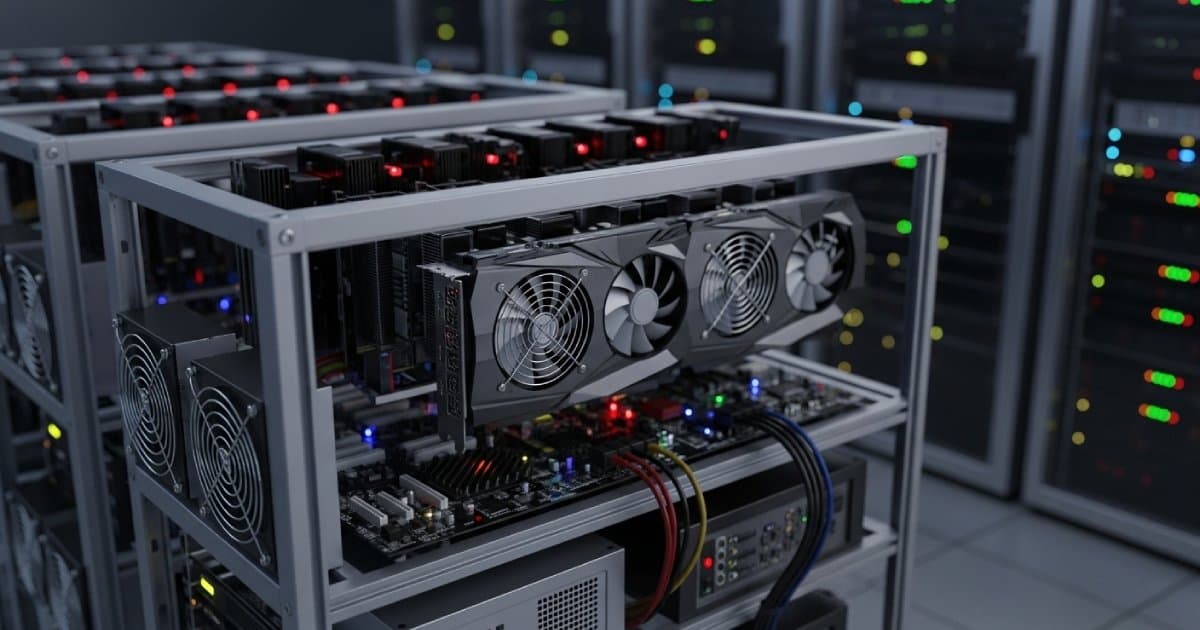
As Unidades de Processamento Gráfico (GPUs), as placas usadas para jogos de PC de ponta, tornaram-se o próximo passo. As GPUs são projetadas para cálculos paralelos complexos, tornando-as muito mais eficientes nas tarefas repetitivas de hashing da mineração do que as CPUs. A mineração com GPU oferece flexibilidade, pois você pode alternar entre a mineração de diferentes criptomoedas (altcoins) que usam algoritmos amigáveis para GPU.
Mineração com ASIC: A Potência Máxima
Um Circuito Integrado de Aplicação Específica (ASIC) é uma peça de hardware projetada para um único propósito. Em cripto, um minerador ASIC é construído exclusivamente para minerar o algoritmo de uma criptomoeda específica (por exemplo, SHA-256 para Bitcoin (BTC)). Eles são incrivelmente poderosos e eficientes, mas são caros e não têm a flexibilidade das GPUs. Se a moeda para a qual foram projetados se tornar não lucrativa para minerar, o ASIC se torna em grande parte inútil.
Mineração em Nuvem: A Abordagem sem Complicações
A mineração em nuvem permite que você alugue hardware e poder de mineração de uma empresa terceirizada. Você paga uma taxa para alugar uma certa quantidade de 'poder de hash' por um período definido. Isso elimina a necessidade de comprar, configurar e manter seu próprio equipamento. No entanto, acarreta riscos, incluindo menor lucratividade devido a taxas e o potencial de golpes. Uma pesquisa completa sobre a reputação do provedor é crucial.
Começando: Seu Guia de Mineração Passo a Passo
Pronto para tentar minerar? Aqui está um caminho simplificado para iniciantes, focado em ingressar em um pool de mineração.
Passo 1: Escolha sua Criptomoeda e Hardware
Pesquise qual moeda você quer minerar. Considere sua lucratividade, algoritmo e comunidade. Com base em sua escolha, selecione o hardware apropriado. Para iniciantes, começar com a GPU de um PC de jogos potente pode ser um bom ponto de entrada para minerar altcoins.
Passo 2: Obtenha uma Carteira de Criptomoedas
Você precisa de uma carteira segura para receber suas recompensas de mineração. Pode ser uma carteira de software em seu computador, uma carteira móvel ou uma carteira de hardware mais segura. Certifique-se de que a carteira suporta a criptomoeda que você planeja minerar. Você só precisará do seu endereço público da carteira para o software de mineração.
Passo 3: Selecione o Software de Mineração
Seu hardware precisa de software para se conectar à blockchain e ao pool de mineração. Opções populares incluem CGMiner, BFGMiner (para usuários mais avançados), ou software de fácil utilização como NiceHash ou Cudo Miner, que simplificam o processo.
Passo 4: Junte-se a um Pool de Mineração
A mineração solo é extremamente difícil para iniciantes. Ao se juntar a um pool de mineração, você combina seu poder computacional com outros mineradores. Isso aumenta drasticamente suas chances de encontrar coletivamente um bloco. As recompensas são então distribuídas entre todos os membros do pool com base em seu poder de hash contribuído. Isso fornece um fluxo de renda muito mais estável e previsível.
Passo 5: Configure e Comece a Minerar
Baixe e instale o software de mineração escolhido. Você precisará configurá-lo com o endereço do servidor do seu pool de mineração, seu nome de usuário e seu endereço público da carteira. Uma vez configurado, você pode executar o software, e ele começará a realizar cálculos. Você pode monitorar seu progresso e ganhos através do painel do seu pool de mineração.
A Mineração de Criptomoedas Ainda é Lucrativa?
A lucratividade é um alvo móvel e depende de vários fatores-chave:
- Custo do Hardware: O investimento inicial em GPUs ou ASICs.
- Preço da Eletricidade: Esta é muitas vezes a maior despesa contínua. A mineração é intensiva em energia, então uma tarifa de eletricidade baixa é crucial para a lucratividade.
- Preço da Criptomoeda: O valor da moeda que você está minerando impacta diretamente seus ganhos. A alta volatilidade significa que os lucros podem mudar diariamente.
- Dificuldade da Rede: À medida que mais mineradores se juntam à rede, a dificuldade aumenta, o que significa que seu hardware ganha menos cripto pela mesma quantidade de trabalho.
- Taxas do Pool: Os pools de mineração geralmente cobram uma pequena porcentagem (1-3%) de seus ganhos por seu serviço.
Antes de investir, use uma calculadora de lucratividade de mineração online. Essas ferramentas permitem que você insira seu hardware, custo de eletricidade e outros fatores para estimar os ganhos potenciais.
O Debate Ambiental e o Futuro da Mineração
O consumo de energia da mineração Proof-of-Work, particularmente para grandes redes como o Bitcoin (BTC), gerou preocupações ambientais significativas. O enorme esforço computacional requer uma vasta quantidade de eletricidade, muitas vezes proveniente de combustíveis fósseis. Em resposta, a indústria está vendo um impulso para o uso de fontes de energia renováveis para operações de mineração. Além disso, um mecanismo de consenso alternativo chamado Proof-of-Stake (PoS) ganhou proeminência. O PoS substitui os mineradores por 'validadores' que apostam sua própria cripto para proteger a rede, um processo que é mais de 99% mais eficiente em termos de energia. O Ethereum (ETH), a segunda maior criptomoeda, fez uma famosa transição de PoW para PoS. No entanto, o PoW continua sendo o padrão ouro de segurança para muitos, e continuará a ser o núcleo do Bitcoin (BTC) e de muitas outras criptomoedas no futuro previsível.
Perguntas Frequentes
Embora seja tecnicamente possível para algumas moedas obscuras, não é lucrativo ou prático para as principais criptomoedas como o Bitcoin (BTC). O poder de processamento é muito baixo e o calor gerado pode danificar seu dispositivo. Você provavelmente gastaria mais em eletricidade do que ganharia.
Um pool de mineração é um grupo de mineradores que combinam seu poder computacional (taxa de hash) para aumentar sua chance coletiva de encontrar um bloco e ganhar recompensas. As recompensas são então divididas entre os membros proporcionalmente à sua contribuição. Para qualquer pessoa sem uma enorme fazenda de mineração, juntar-se a um pool é essencial, pois fornece pagamentos mais consistentes, embora menores, em comparação com a probabilidade extremamente baixa de encontrar um bloco por conta própria (mineração solo).
O custo varia drasticamente. A mineração em nuvem pode ser iniciada com um pequeno investimento de menos de US$ 100. Construir uma plataforma de mineração de GPU básica pode custar de US$ 500 a vários milhares de dólares. Um minerador ASIC de alto desempenho para Bitcoin (BTC) pode custar de US$ 5.000 a US$ 15.000 ou mais. Lembre-se sempre de levar em conta o custo contínuo da eletricidade.
A lucratividade muda constantemente devido às flutuações de preço do mercado e à dificuldade de mineração da rede. Não existe uma única moeda 'mais lucrativa' por muito tempo. Os mineradores usam calculadoras online como WhatToMine e 2CryptoCalc para verificar a lucratividade em tempo real de diferentes moedas com base em seu hardware específico, taxa de hash e custo de eletricidade.
A legalidade da mineração de criptomoedas depende inteiramente do seu país de residência. É legal em muitos países, incluindo os Estados Unidos, Canadá e a maior parte da União Europeia. No entanto, algumas nações impuseram restrições ou proibições totais. É crucial pesquisar e entender suas leis e regulamentos locais antes de investir em hardware de mineração.
Os principais riscos incluem o alto custo inicial do hardware, despesas significativas e contínuas com eletricidade, a volatilidade do preço das criptomoedas (as recompensas podem se desvalorizar rapidamente), obsolescência ou falha do hardware e a dificuldade de rede sempre crescente, que reduz sua parcela de recompensas ao longo do tempo. Não há garantia de lucro.
Ao configurar seu software de mineração ou ingressar em um pool de mineração, você deve fornecer um endereço de carteira público para a criptomoeda que está minerando. O pool enviará automaticamente seus ganhos acumulados para este endereço de carteira assim que você atingir um limite mínimo de pagamento (por exemplo, 0.01 ETH). Os pagamentos são normalmente processados diariamente ou semanalmente.
Proof-of-Work (PoW) é um mecanismo de consenso que depende de 'mineradores' usando poder computacional para resolver problemas matemáticos complexos para validar transações e proteger a rede. Proof-of-Stake (PoS) é uma alternativa onde indivíduos ou grupos atuam como 'validadores' e são escolhidos para criar novos blocos com base no número de moedas que possuem e estão dispostos a 'apostar' como garantia. O PoS é significativamente mais eficiente em termos de energia do que o PoW.