
How to Sell Cryptocurrency Safely: A Complete Guide for 2024
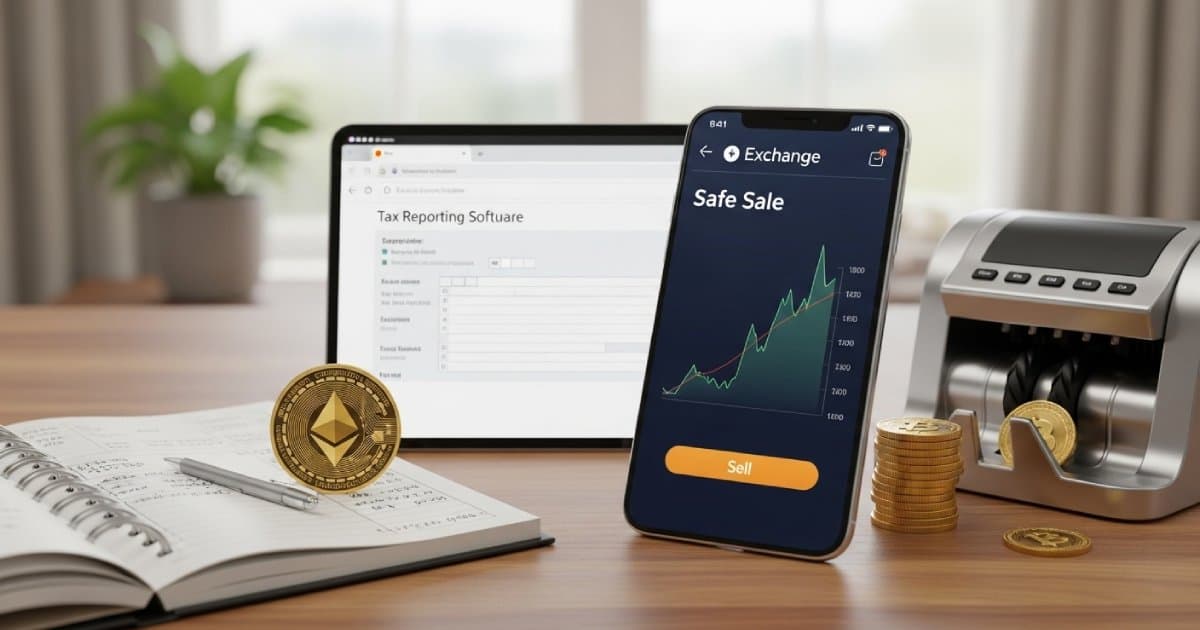
Introduction to Selling Cryptocurrency
Selling your cryptocurrency is a significant step, whether you're cashing in on an investment, rebalancing your portfolio, or needing fiat currency for a purchase. However, the process isn't as simple as withdrawing money from a bank. It involves navigating various platforms, understanding different order types, and, most importantly, ensuring your assets are secure throughout the transaction. This guide will walk you through everything you need to know to sell your cryptocurrency safely and efficiently, from choosing the right platform to handling your tax obligations.
Understanding Your Selling Options
The first step in selling your crypto is deciding where and how to do it. There are several methods available, each with its own set of advantages and disadvantages. Your choice will depend on factors like speed, fees, privacy, and the type of cryptocurrency you hold.
1. Centralized Exchanges (CEXs)
Centralized exchanges like Coinbase, Binance, and Kraken are the most popular option for selling cryptocurrency. They act as a trusted intermediary, matching buyers and sellers. To sell, you deposit your crypto into your exchange wallet, place a sell order, and then withdraw the resulting fiat currency to your linked bank account.
- Pros: High liquidity (easy to find a buyer), user-friendly interfaces, and relatively fast transactions.
- Cons: Require Know Your Customer (KYC) verification, which means you must provide personal identification. You also don't control the private keys to your crypto while it's on the exchange, exposing you to platform risk.
2. Peer-to-Peer (P2P) Platforms
P2P platforms, such as Binance P2P or Paxful, facilitate direct trades between users. The platform acts as an escrow service, holding the cryptocurrency until the fiat payment is confirmed. Sellers can set their own prices and choose from a wide variety of payment methods, including bank transfers, online payment apps, and even cash.
- Pros: Greater control over price, wider range of payment options, and potentially more privacy.
- Cons: Transactions can be slower, and there is a higher risk of encountering scams if you're not careful.
3. Decentralized Exchanges (DEXs)
Decentralized exchanges like Uniswap or PancakeSwap operate without a central authority. They use smart contracts to execute trades directly from your personal wallet (e.g., MetaMask). While you typically can't sell crypto directly for fiat on a DEX, you can swap your assets for a stablecoin like USDT or USDC. You can then send these stablecoins to a CEX to cash out.
- Pros: Full custody of your funds (non-custodial), no KYC requirements, and access to a vast array of tokens.
- Cons: Can be complex for beginners, involves paying network (gas) fees, and you are responsible for your own security.
4. Bitcoin ATMs
For those who need cash quickly, Bitcoin ATMs offer a way to sell Bitcoin (BTC) and sometimes other major cryptocurrencies in person. You send the crypto to a QR code provided by the ATM, and it dispenses cash.
- Pros: Very fast and convenient for small amounts.
- Cons: Fees are typically very high (often 7-20%), and there are strict transaction limits.
Step-by-Step Guide to Selling on a Centralized Exchange
For most users, a CEX offers the best balance of convenience and security. Here’s a step-by-step process for selling your crypto on a centralized exchange.
Step 1: Choose a Reputable Exchange
Select a well-established exchange with a strong security track record, reasonable fees, and support for your country's fiat currency. Ensure it is licensed and regulated in your jurisdiction.
Step 2: Complete Identity Verification (KYC)
To comply with Anti-Money Laundering (AML) regulations, all reputable exchanges require identity verification. This usually involves submitting a government-issued ID and a selfie. This process can take from a few minutes to several days.
Step 3: Transfer Cryptocurrency to Your Exchange Wallet
If your crypto is in a private wallet (like a hardware or software wallet), you'll need to send it to the exchange. Find the 'Deposit' option on the exchange, select the correct cryptocurrency and network (e.g., ERC-20 for Ethereum), and copy the deposit address. From your private wallet, initiate a 'Send' transaction, paste the address, and confirm. Always double-check the address before sending.
Step 4: Place a Sell Order
Once the funds arrive in your exchange account, navigate to the trading section. You'll have two main order types:
- Market Order: Sells your crypto immediately at the best available current price. It's fast but you might not get the exact price you were hoping for.
- Limit Order: Lets you set a specific price at which you want to sell. The order will only execute if the market price reaches your set price. This gives you more control but there's no guarantee the order will be filled.
Step 5: Withdraw Fiat Currency
After your sell order is executed, the fiat currency (e.g., USD, EUR) will be in your exchange account. Go to the 'Withdraw' section, select your currency, choose your linked bank account, and enter the amount you wish to withdraw. Withdrawals can take 1-5 business days depending on the bank and exchange.
Security Best Practices for Selling Crypto
Security is paramount when dealing with digital assets. Follow these rules to protect your funds.
- Enable Two-Factor Authentication (2FA): Use an authenticator app like Google Authenticator or Authy for all your exchange accounts. Avoid SMS-based 2FA as it's vulnerable to SIM-swapping attacks.
- Beware of Phishing Scams: Scammers create fake websites or send emails that look like they're from your exchange to steal your login credentials. Always bookmark the official exchange website and never click on suspicious links.
- Double-Check Wallet Addresses: When transferring crypto, copy and paste the address and then visually verify the first and last few characters. A single mistake can result in the permanent loss of your funds.
- Avoid Public Wi-Fi: Never access your exchange or wallet accounts on public Wi-Fi networks, as they are often insecure and can expose your data to hackers.
Navigating Cryptocurrency Taxes
Selling cryptocurrency is a taxable event in most countries. Ignoring your tax obligations can lead to severe penalties. It's crucial to understand the basics.
Understanding Taxable Events
A taxable event occurs when you 'dispose' of your cryptocurrency. This includes:
- Selling crypto for fiat currency (e.g., USD, EUR).
- Trading one cryptocurrency for another (e.g., selling Bitcoin (BTC) for Ethereum (ETH)).
- Using cryptocurrency to pay for goods or services.
Calculating Capital Gains and Losses
Your tax is typically calculated on the capital gain. The formula is: Capital Gain = Sale Price - Cost Basis. The 'Cost Basis' is the original price you paid for the crypto, including any fees. If you sell for less than your cost basis, you have a capital loss, which can sometimes be used to offset gains.
Keeping Meticulous Records
You must keep detailed records of every transaction, including the date, type of crypto, amount, value in fiat at the time of the transaction, and any fees paid. This is essential for accurate tax reporting.
Using Crypto Tax Software
Manually tracking transactions can be overwhelming. Consider using crypto tax software like Koinly, CoinTracker, or Accointing. These tools can connect to your exchanges and wallets via API to automatically import and categorize your transactions, generating the necessary tax reports.
Consult a Professional
Tax laws surrounding cryptocurrency are complex and vary by country. It is always recommended to consult with a qualified tax professional who specializes in digital assets to ensure you are fully compliant.
Conclusion
Selling cryptocurrency safely and effectively requires a thoughtful approach. By choosing the right platform for your needs, following strict security protocols, and staying on top of your tax obligations, you can successfully convert your digital assets into fiat currency. Whether you use a CEX for convenience, a P2P platform for flexibility, or a DEX for self-custody, always prioritize security and due diligence to protect your hard-earned investments.
Frequently Asked Questions
The safest way depends on your technical expertise. For most people, using a large, reputable centralized exchange (CEX) with strong security features like 2FA is the safest and most straightforward method. For advanced users who prioritize self-custody, selling stablecoins (swapped on a DEX) via a CEX is also a secure route. Always use a hardware wallet to store assets not actively being traded.
Yes, in most jurisdictions, selling cryptocurrency for fiat money is a taxable event. You are generally required to report capital gains or losses on your tax return. The specific rules and tax rates vary by country, so it's essential to consult local tax regulations or a tax professional.
The timeline varies. The actual sale on an exchange is nearly instant. Transferring crypto to the exchange can take a few minutes to an hour, depending on network congestion. The final step, withdrawing fiat to your bank account, is typically the longest, taking anywhere from 1 to 5 business days.
It is very difficult to sell crypto for fiat currency without KYC. Most centralized exchanges that handle fiat are legally required to perform KYC checks. Some P2P platforms may allow small transactions without full verification, but this comes with higher risks. Decentralized exchanges (DEXs) do not require KYC, but they only allow you to swap crypto for other crypto (like stablecoins), not directly for cash.
There are several potential fees: 1) Network fees (gas fees) for transferring crypto from a private wallet to an exchange. 2) Trading fees on the exchange, which can be a flat fee or a percentage of the trade value (typically 0.1% to 1.0%). 3) Withdrawal fees for sending fiat currency to your bank account.
A market order is an instruction to sell immediately at the best available price in the market. It guarantees execution but not the price. A limit order is an instruction to sell at a specific price or better. It gives you control over the price but does not guarantee that the order will be filled if the market price never reaches your limit price.
To avoid P2P scams, always use the platform's escrow service. Never release your crypto until you have confirmed that the buyer's payment is in your account and cleared. Trade with users who have a high reputation score and a large number of completed trades. Be wary of buyers offering a price far above the market rate, as this is a common red flag.
If your goal is to convert crypto into fiat currency (like USD or EUR), you will almost always need to use a centralized exchange (CEX) at some point. A decentralized exchange (DEX) is for trading one crypto for another while maintaining self-custody. A common strategy is to use a DEX to swap a volatile asset for a stablecoin, then send the stablecoin to a CEX to cash out to your bank account.