
Entendendo os NFTs: Um Guia Abrangente Sobre o Que Lhes Dá Valor
O que são NFTs (Tokens Não Fungíveis)?
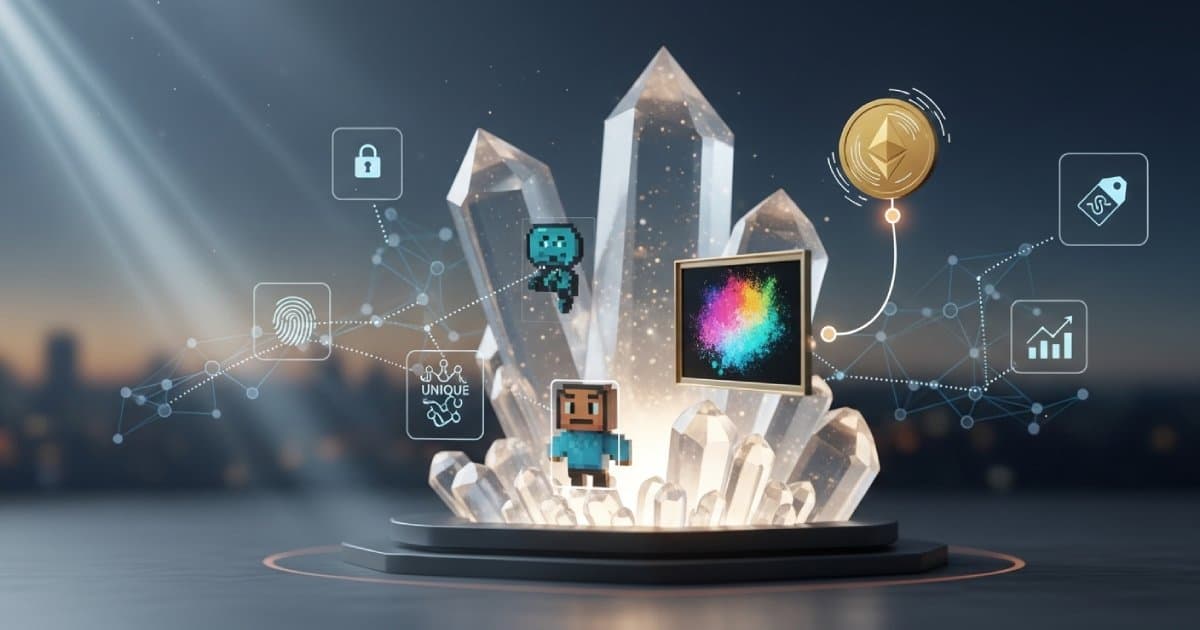
Em sua essência, um Token Não Fungível (NFT) é um ativo digital único que representa a propriedade de um item ou conteúdo específico. Diferente de criptomoedas como Bitcoin (BTC) ou Ethereum (ETH), que são 'fungíveis' (o que significa que um BTC é idêntico e intercambiável por outro), cada NFT é único e não pode ser substituído. Essa singularidade é registrada em uma blockchain, um livro-razão digital distribuído, que fornece um registro imutável e transparente de propriedade.
Pense da seguinte forma: uma nota de dólar é fungível. Você pode trocar uma por outra, e ambas têm o mesmo valor. No entanto, a pintura da Mona Lisa é não fungível. É uma obra de arte única, e quaisquer cópias ou impressões não são o original. Os NFTs aplicam esse conceito de propriedade única ao mundo digital, permitindo a propriedade verificável de arte digital, música, colecionáveis, itens de jogos e muito mais.
Como os NFTs Funcionam? A Tecnologia por Trás do Hype
Os NFTs são criados, ou 'cunhados', por meio de contratos inteligentes em uma blockchain. Esses contratos inteligentes são programas autoexecutáveis com os termos do acordo escritos diretamente no código. Eles lidam com a verificação da propriedade e o gerenciamento da transferibilidade do NFT. A blockchain mais popular para NFTs tem sido historicamente a Ethereum (ETH), que estabeleceu padrões de token amplamente utilizados como o ERC-721 (para ativos únicos e individuais) e o ERC-1155 (que permite múltiplas edições de um item).
Quando um NFT é cunhado, suas informações únicas, incluindo seu criador, proprietário atual e histórico de transações, são armazenadas na blockchain. Este livro-razão público garante que qualquer pessoa possa verificar a autenticidade e a proveniência do NFT, rastreando todo o seu ciclo de vida desde a criação. Essa transparência é um pilar da proposta de valor dos NFTs, pois resolve problemas de longa data de autenticidade e propriedade no mundo digital.
Desconstruindo o Valor do NFT: O que Faz um Ativo Digital Valer Milhões?
O valor de um NFT não é arbitrário; é impulsionado por uma combinação de vários fatores-chave. Entender esses elementos é crucial para quem quer comprar, vender ou criar NFTs. Embora o sentimento do mercado desempenhe um papel, o valor subjacente está frequentemente enraizado em atributos mais tangíveis.
1. Escassez e Singularidade
Assim como no mercado de arte e colecionáveis físicos, a escassez é um dos principais impulsionadores de valor. Um NFT pode ser uma peça única (1/1), tornando-a a única de seu tipo em existência. Outros projetos podem lançar uma série limitada, como 10.000 personagens de imagem de perfil (PFP) únicos. Quanto mais escasso o NFT ou mais raros seus traços específicos dentro de uma coleção, maior seu valor potencial.
2. Utilidade e Caso de Uso
Cada vez mais, o valor de um NFT está ligado à sua utilidade. O que você pode fazer com ele? A utilidade pode variar desde fornecer acesso a uma comunidade online exclusiva ou eventos da vida real, até servir como um personagem ou item jogável em um videogame. Alguns NFTs representam a propriedade de terrenos digitais em um metaverso, enquanto outros podem conceder direitos de governança em uma organização autônoma descentralizada (DAO). Quanto mais tangível e desejável a utilidade, mais valioso o NFT se torna.
3. Proveniência e Histórico de Propriedade
Proveniência refere-se ao histórico de propriedade de um ativo. O valor de um NFT pode ser significativamente influenciado por seu criador e proprietários anteriores. Um NFT criado por um artista digital famoso como Beeple ou uma marca conhecida carrega mais peso do que um de um criador desconhecido. Da mesma forma, se um NFT foi anteriormente propriedade de um colecionador proeminente ou celebridade, seu valor percebido pode aumentar, assim como um objeto físico que pertenceu a uma figura histórica.
4. Reputação do Criador e Marca
A visão de longo prazo e a reputação do artista ou da equipe do projeto são críticas. Um criador com um histórico comprovado, uma marca forte e um roteiro claro para o futuro inspira mais confiança nos compradores. Os investidores são mais propensos a pagar um prêmio por um NFT de um projeto que eles acreditam que continuará a crescer, inovar e entregar valor ao longo do tempo.
5. Comunidade e Prova Social
A força e o engajamento da comunidade de um projeto de NFT são primordiais. Uma comunidade vibrante e ativa em plataformas como Discord e Twitter cria um efeito de rede, impulsionando a demanda e reforçando o valor da coleção. Projetos como Bored Ape Yacht Club e CryptoPunks demonstraram que um forte senso de identidade e pertencimento entre os detentores pode ser um dos mais poderosos impulsionadores de valor a longo prazo.
Um Guia Prático para Avaliar o Valor Potencial de um NFT
Avaliar um NFT requer pesquisa diligente, muitas vezes referida como 'DYOR' (Do Your Own Research - Faça Sua Própria Pesquisa). Antes de investir, considere uma abordagem multifacetada para a avaliação.
Comece examinando os fundamentos do projeto. Quem é a equipe por trás dele? Eles são públicos e têm experiência relevante? Examine o roteiro do projeto: quais são seus planos futuros para desenvolvimento, parcerias e utilidade? Um projeto sem uma visão clara é um sinal de alerta significativo. Em seguida, mergulhe nos dados on-chain. Ferramentas como o Etherscan ou plataformas especializadas de análise de NFT podem fornecer insights sobre:
- Número de Detentores Únicos: Um alto número de detentores únicos em relação ao tamanho da coleção sugere uma comunidade descentralizada e forte, em vez de algumas 'baleias' controlando a oferta.
- Volume de Transações e Preço Mínimo (Floor Price): Atividade de negociação consistente e um preço mínimo estável ou crescente (o preço mínimo para um NFT na coleção) podem indicar uma demanda saudável.
- Distribuição de Detentores: Analise qual porcentagem da oferta é detida pelas principais carteiras. A alta concentração pode representar um risco se um grande detentor decidir vender.
Finalmente, avalie a saúde da comunidade. Junte-se ao Discord do projeto e siga seu Twitter. A conversa é ativa e positiva? A equipe está se envolvendo ativamente com a comunidade e fornecendo atualizações? Uma comunidade forte é muitas vezes um indicador principal do sucesso de um projeto a longo prazo.
Os Riscos e a Volatilidade do Mercado de NFTs
É essencial reconhecer os altos riscos associados ao mercado de NFTs. Os preços são extremamente voláteis e podem flutuar drasticamente com base no hype e nas tendências do mercado. O mercado também é menos líquido do que os mercados de ações ou cripto tradicionais, o que significa que pode ser difícil encontrar um comprador para o seu NFT pelo preço desejado, especialmente durante uma baixa.
Além disso, o espaço não está imune a golpes. 'Rug pulls', onde os desenvolvedores abandonam um projeto após pegar os fundos dos investidores, são uma ameaça real. Golpes de phishing, onde atores mal-intencionados tentam enganá-lo para assinar uma transação que drena sua carteira, também são comuns. Sempre seja cauteloso, nunca compartilhe a frase semente de sua carteira e verifique cada transação antes de aprová-la.
O Futuro dos NFTs: Além da Arte Digital
Enquanto a arte digital e os colecionáveis dominaram a narrativa inicial dos NFTs, o potencial da tecnologia se estende muito além deles. Estamos começando a ver NFTs usados para a tokenização de ativos do mundo real, como imóveis, permitindo a propriedade fracionada e uma transferência mais fácil. Eles também estão sendo explorados para bilhetagem (criando passes de eventos impossíveis de falsificar), gerenciamento de direitos de propriedade intelectual e verificação de identidade digital.
À medida que a tecnologia amadurece e se integra mais profundamente com nossas vidas digitais e físicas, a definição de valor do NFT continuará a evoluir. Os NFTs que manterão valor a longo prazo provavelmente serão aqueles que oferecem utilidade genuína, são apoiados por marcas e comunidades fortes e preenchem perfeitamente a lacuna entre os mundos digital e físico. Entender os impulsionadores fundamentais de valor hoje é a melhor maneira de se preparar para o futuro emocionante desta tecnologia transformadora.
Perguntas Frequentes
Não, de forma alguma. A grande maioria dos NFTs tem pouco ou nenhum valor monetário. O valor é criado por fatores como escassez, utilidade, reputação do criador e demanda da comunidade. Muitos NFTs são criados, mas apenas uma pequena fração ganha tração e valor significativos. É crucial pesquisar minuciosamente antes de assumir que um NFT será valioso.
O preço de um NFT é determinado pela oferta e demanda no mercado aberto. É definido pelo que alguém está disposto a pagar por ele. Este preço é influenciado por seus principais impulsionadores de valor: raridade dos traços, utilidade (por exemplo, acesso, uso em jogos), a fama do criador, seu histórico de propriedade (proveniência) e a força de sua comunidade.
Sim, com certeza. O mercado de NFTs é altamente volátil, e um NFT pode perder seu valor rapidamente, até mesmo a zero. Isso pode acontecer se o hype em torno de um projeto diminuir, o projeto não cumprir seu roteiro, a comunidade se dissolver ou o mercado mais amplo sofrer uma queda. Não há garantia de retenção de valor.
O 'preço mínimo' ou 'floor price' é o preço de venda mais baixo para qualquer NFT dentro de uma coleção específica em um marketplace. É uma referência para o custo mínimo de entrada nesse projeto. O 'valor real' de um NFT específico, no entanto, pode ser muito maior do que o preço mínimo se ele tiver traços raros ou desejáveis que o tornem mais procurado pelos colecionadores.
Normalmente, sim. A maioria dos NFTs é construída em blockchains como Ethereum (ETH) ou Solana (SOL), e as transações são realizadas usando a criptomoeda nativa dessa blockchain (por exemplo, ETH para a rede Ethereum). Você precisará de uma carteira de criptomoedas e da criptomoeda apropriada para comprar um NFT na maioria dos marketplaces.
A Ethereum (ETH) é a blockchain original e mais dominante para NFTs, hospedando muitas das coleções mais valiosas. No entanto, devido às altas taxas de gás na Ethereum, outras blockchains ganharam popularidade. Estas incluem a Solana (SOL) por sua alta velocidade e baixos custos, a Polygon como uma solução de escalonamento de Camada 2 para a Ethereum, e a Flow, que é projetada para aplicações e jogos de consumo.
A autenticidade é verificada na blockchain. Em um marketplace de NFTs como OpenSea ou Magic Eden, procure por uma marca de verificação ao lado do nome da coleção. Você também pode verificar o endereço do contrato do NFT para garantir que ele corresponda ao endereço do contrato oficial publicado pelos criadores do projeto. Isso impede que você compre uma cópia falsificada.
Os NFTs são uma classe de ativos especulativos de alto risco. Embora alguns tenham gerado retornos enormes para os primeiros compradores, muitos outros resultaram em perdas significativas. Eles não devem ser considerados um investimento tradicional. Se você optar por comprar NFTs, deve fazê-lo com pleno entendimento dos riscos e apenas com capital que pode se dar ao luxo de perder. Concentre-se em projetos com fundamentos sólidos em vez de perseguir o hype de curto prazo.